Showing posts with label Special Education. Show all posts

Monday, 16 July 2018

TRUST is Essential to Building Relationships


Image result for empathy empathy put yourself in their shoes

Put yourself in the shoes of an at risk, vulnerable youth and any of the statements below could be true:
  • There is sometimes food to eat and other times the fridge is bare
  • You don't have running shoes that fit you for gym class
  • Your gaurdian could not afford to purchase the medication you rely on to reduce your anxiety
  • Your older brother was up all night partying with his friends and because of that you didn't get much sleep
  • You waited up until your dad got home from his night shift because you wanted to see him
  • Your parents were fighting before you left for school 
  • You have watched your parent or sibling doing drugs
What is one area that these students have in common MISTRUST. Rightly so, as an infant and child you need to trust that someone is going to feed you, love you, and provide your basic needs. When an infant/child has experienced trauma, loss or endured periods of time when their basic needs were not being met it can lead to mistrust of adults and peers. Mistrust is a valid response to feeling betrayed, abandoned or experiencing traumatic life events.


Image result for trust


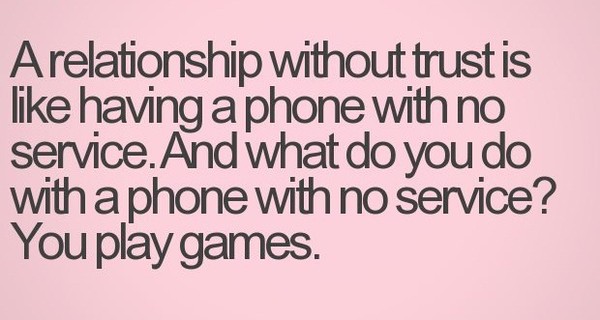
What improves student learning - positive relationships. What is at the essence of relationships - Trust!
Related image

Trust is the choice to be vulnerable and the ability to take risks in another person.

Creating a culture of trust in your school is essential for effective leadership and learning for ALL.

When a parent asks "Tell me about my child's learning?" or "What next?"  They need to able to trust you as the teacher or administrator and know that you have the their child's best interest at the forefront of the decisions being made.


In Davis' Ted Talk he speaks of three drivers of trust:

1. Ability - does the person do what they say they are going to do. Does the person have the ability to do what they say they are going to do?

2. Benevolence - Do they care about me? If they really care about me it is more likely to trust in the person.

3. Integrity - having a set of values and living those values that other people agree with. Saying you are going to do something and doing it!


When you are trying to build trust with students, parents of special needs students or staff in your school it is important that leaders build the perception of their ability benevolence and integrity.

How are some ways you can do that?

  • By making promises you know you can keep!
  • If you give your word that it will happen you better ensure it does!
  • Do your best to live up to your commitments and be on time for your meetings!
  • Show you care by asking questions, listening and celebrating!
  • Continue your professional learning especially in Special Education so you know what you are talking about!

Sunday, 15 July 2018

Conflict

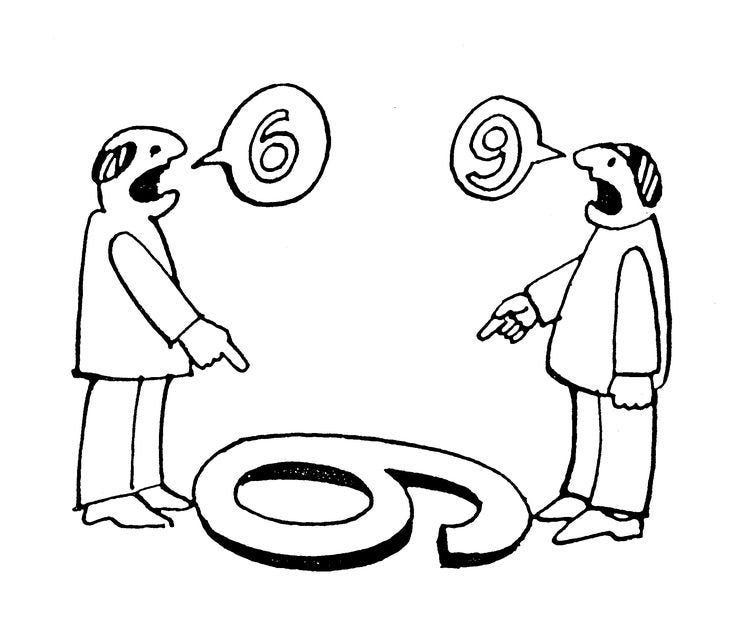
Conflict is a normal part of human relationships and can have a positive outcome if conflict stems from a need for change. Conflict occurs when someone decides that the current conditions are unacceptable and need to be changed.


Image result for conflict


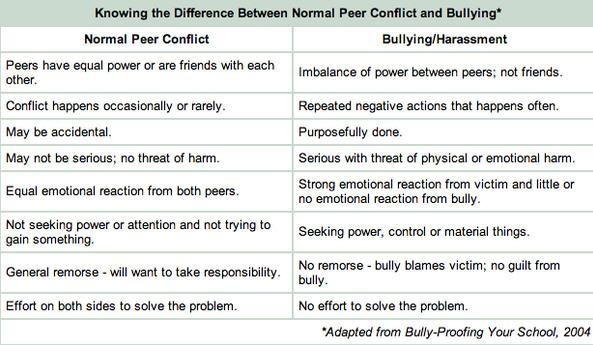
As an administrator preventing and resolving conflict is an everyday task. One important myth to dispel particularly with primary and junior students is the notion that "conflict" is bullying. There is a very clear distinction between the two that is often misunderstood by students.

Related image

There are three common responses to conflict:
  1. Avoidance - taking a break to cool off can be a good response especially when emotions are heated however avoiding the conflict forever hoping it will go away is not productive.
  2. Confrontation - acting on the belief that one side is right. A win-lose situation.
  3. Acquiescence - giving into the other side.
Image result for conflict resolution

Special Education and Conflict


Conflict can occur in special education at the planning stage, throughout the implementation of a student's program or as a result of a poor relationship between parties ie. parent and teacher, teacher and student, teacher and administrator etc.

When conflict arises it is important that the parent speak to the Teacher or Special Education first before moving on to the Principal/Vice Principal.

At any level (Teacher, Principal, SO) successful conflict resolution begins with both parties have a clear understanding of the problem.

Using the key strategies of active listening (explore, restate, clarify and summarize) will help parties understand the issues at the heart of the conflict. I'm going to post this in my office in September!


Conflict Resolution can only occur when emotions can be put to the side in order to come to a solution in the best interest of the student. 

Principals of Conflict Resolution:

1. Clear understanding of issues or concerns
2. Student focused
3. Mutual Respect and Respect for Diversity
4. Accessibility
5. Balance of Power
6. Fairness
7. Transparency


Here is a list of strategies that can prevent conflict from occurring or help in the resolution stage:
  • Positive School Community
  • Effective Communication
  • Take notes at meetings and share with all parties ensure their is a section for follow-up with who is assigned to each task and a date for when the task will be completed
  • Book a follow-up meeting before ending a parent meeting
  • Believing that a solution can be found in the best interest of the student
  • Accepting that there is more than one way to solve a problem


Here is another quick tip sheet that could hang in my office: 


For more information on conflict and effective strategies check out Shared Solutions:

Thursday, 12 July 2018

Transition Planning - Grade to Grade

I gave this set of questions to teachers when they were meeting to discuss students
that will be in their classroom in September.


Transition Planning


Sample questions to ask this year’s teacher when discussing students’ strengths and needs:


Student Name: _____________________________________

  1. What is her relative strength? 
  2. What is his interest/hobby/passion?
  3. What do you see as her next step for Reading/Writing on the IEP?
  4. Why did you pick this math goal on the IEP? 
  5. What does he need to understand in math to close gaps in understanding?
  6. What was her number one struggle when it came to behaviour?
  7. What updates would you make to his behaviour plan? Safety Plan?
  8. If I were to take one fact away today what would be the most important thing to remember to set the student up for success in September? 
  9. How do you connect with the parents? 
  10. Is outside agencies involved with the family or the student?
  11. What area did you see the most growth in this year and why do you think that was? 


Wednesday, 11 July 2018

Ross Greene - Children do Well if they Can


I have read two of Dr Greene's books, "The Explosive Child" and "Lost at School" and have been a participant of one of Greene's workshops. What I value most about his work is his token slogan:


Image result for kids do well if they can


If you have the attitude that kids do well if they want to then the reason the kid is not doing well is because they don't want to. With this philosophy then in order to change behaviour you need the student to want to do well and you focus on making him want to do well. How do you do that? Reward good behaviour! 

Ross Greene asks, "What human being does not want to do well?" Doing well is always preferable to not doing well. If a kid could do well why wouldn't they? What if you take away the element of choosing to do well or not do well and look instead at what is in the child's way of doing well. You main role changes to figuring out the problem (what is getting in the way) instead of rewarding good behaviour and punishing the bad.


The Ross Greene model is based on the premise that challenging behaviour occurs when the expectations being placed on a kid exceed the kid’s capacity to respond adaptively, and that some kids are lacking the skills to handle certain demands and expectations.
If you believe a kid is challenging because of lagging skills and unsolved problems, then rewarding and punishing may not be the ideal approach.


We use Dr Greene's Assessment of Lagging Skills when discussing a vulnerable student. 

Fillable ALSUP
https://www.livesinthebalance.org/sites/default/files/ALSUP%20060417.pdf

ALSUP Guide
https://www.livesinthebalance.org/sites/default/files/ALSUP%20Guide%20060417.pdf


Today I was fortunate to see another version of the ALSUP created and used by an administrator in another school board and I loved the adaptations made.


I like how it has the added column to show an example and the frequency is expanded. I will be using this in my next school meeting for sure!


Ross Greene's Website
https://www.livesinthebalance.org/about-cps

Tuesday, 11 April 2017

Teaching kids to Cook (ASD)


Your Special Chef is a collection of resources to help teach cooking skills to individuals with disabilities. 

Food preparation skills cross a variety of curricular domains, and learning to prepare simple meals can improve independence and nutrition. An individual with disabilities who acquires cooking skills may have an increased ability for employment in food industries, may save money by preparing more economical options, may use cooking as a form of recreation, and may experience social benefits by cooking with friends or preparing food for a potluck. Academically, learning to cook may promote math and reading proficiencies required for employment.

The website has a variety of visual recipes but also has a function for creating your own recipe 

https://www.yourspecialchef.net/

Student and Classroom Resources - Visuals

You can find numerous resources and pics at this website. If you don't have access to boardmaker or some of the other tools that are supported by this website make sure to apply filter and check off the resources you will be able to download ie. PDF

https://w3.setbc.org/students/Pages/Student-Resources-Library.aspx

Tuesday, 12 August 2014

Working Memory Ted Talk

Ted Talk: Peter Doolittle: How your "working memory" makes sense of the world


"Life comes at us very quickly, and what we need to do is take that amorphous flow of experience and somehow extract meaning from it." In this funny, enlightening talk, educational psychologist Peter Doolittle details the importance — and limitations — of your "working memory," that part of the brain that allows us to make sense of what's happening right now.
pinThis talk was presented at an official TED conference, and was featured by our editors on the home page.

Friday, 16 May 2014

Never Give Up Jason McElwain

Teaching about differences, having perseverance and making a difference in another person's life! Great motivational clip reinforcing Education for All! Brings tears to my eyes to think that the coach made a boys dream come true with one simple act!  We have a lot of power to influence students and to make a difference in the lives of our students. It is easy to get bogged down in paperwork, curriculum expectations and timelines leading to stress and frustrations! That is a good time to watch a video like this one to bring perspective back into your life! We need to stop and remind ourselves why did we become educators/administrators?


Sunday, 6 April 2014

The Alert Program

The Alert Program by Therapy Partners


  • Practical Approach to Support Self Regulation 
  • Free Resources
  • Book: How does your Engine Run

Friday, 4 April 2014

Do 2 Learn

Do2learn provides thousands of free pages with social skills and behavioral regulation activities and guidance, learning songs and games, communication cards, academic material, and transition guides for employment and life skills

http://www.do2learn.com/