Sunday, 28 September 2014

Math Continuum


I was looking for a math continuum so that I could pin point where each student needs to start their math journey. When we (teachers) complete diagnostic assessment for Reading in Primary we use PM Benchmarks. If a student is at an Instructional level 21 we start their learning journey at level 21 through guided reading. My question is how does that transfer to math. Teachers perform diagnostic assessments to see where their students are academically. Based on that data the teacher can see who needs to review past expectations to solidify their learning. My goal is to pinpoint each students starting point in math as I would for reading. Which lead me to my search for a math continuum online. I was able to find what I was looking for from TDSB and Halton. These boards have created a chart for the specific expectations across a grade continuum.

Halton math continuum

How does this transfer to IEP's?

Often when I read a students IEP their math goals align with the classroom long range plans. For example if the class is working on multiplication of single digit by two digit numbers the IEP goal may read student will multiply single digit by single digit numbers up to 5x10.

The problem?
I want to pose the question is this goal the best goal for the student. If we look at the math continuum and this student still needs to solidify their learning of number sequences using multiples of 2, 3, and 4 should the students goal be multiplication or rather the next step in their personal math learning continuum???


While searching I also found:

The Peel District School Board has a website called Math Online

http://mathonline.peelschools.org/

Friday, 26 September 2014

Reluctant Readers author Janet Tashjian

I would like to read a book by Janet Tashjian. She is an author of boos for reluctant readers.

Website http://janettashjian.com

Wednesday, 10 September 2014

LD and Learning Skills

Employment and Learning Disabilities

After reading an article Catherine M. Smith entitled "Possibilities and Pitfalls: Employment and Learning Disabilities" it became very clear to me how important it is to teach students more than what is in the curriculum. (Not that this is a new phenomenon but sometimes it is important to re-examine the big picture)  

It is not surprising to hear that adults with an LD struggle to find employment, to acquire appropriate accommodations or training and often lose the job within a short time. Smith points out possible reasons for this: lack of fit between skills and job requirements; social skills difficulties; systemic barriers resulting in lack of appropriate accommodations; and difficulty handling the learning experiences inherent in any job in today’s world. 


So the question I asked myself is what can I do as a teacher of junior and intermediate LD students. The article reinforced the importance of focussing on the following skills in the classroom:

  1. Students need to be able to identify and understand their strengths and weaknesses
  2. Students need to be able to set measurable and attainable goals, assess their achievement and follow through with the next step.
  3. Students need to practice advocating for the themselves and their social, academic and emotional needs.
  4. Students need to be able to communicate their feelings
  5. Students need to understand the concept of perseverance and see the result of hard work
  6. Students need to take part in creating their IEP and understand the purpose for the plan
  7. Students need to be able to work collaboratively with others

I have always said to my students before handing out the report cards that the most important section is the Learning Skills and the corresponding letter grades. As a mother it is the section of the report card my husband and I sit down and analyze with our daughter. But it is often an afterthought, a last minute lesson before report card writing because we have become inundated by curriculum expectations and have run out of time to teach the life long skills found on the front page of the report card. 

This year my goal is to focus on explicitly teaching the skills listed above which correlate with the expectations under the learning skills.

http://ldatschool.ca/ Great Website - with links to resources that can be used for a variety of learners

Checklist to use for Learning Skills


Possibilities and Pitfalls: Employment and Learning Disabilities
http://www.ldao.ca/introduction-to-ldsadhd/ldsadhs-in-depth/articles/about-lds/possibilities-and-pitfalls-employment-and-learning-disabilities/

Tuesday, 19 August 2014

Go Noodle

Brain Breaks for students

Ideal age range K-6

Lots of videos to use for DPA or relaxation. I like to use the meditation videos to help students unwind and breath. Helps students to deal with stress and anxiety.


https://www.gonoodle.com/

Tuesday, 12 August 2014

Working Memory Ted Talk

Ted Talk: Peter Doolittle: How your "working memory" makes sense of the world


"Life comes at us very quickly, and what we need to do is take that amorphous flow of experience and somehow extract meaning from it." In this funny, enlightening talk, educational psychologist Peter Doolittle details the importance — and limitations — of your "working memory," that part of the brain that allows us to make sense of what's happening right now.
pinThis talk was presented at an official TED conference, and was featured by our editors on the home page.

Ted Talk - What makes a Great Leader

What Makes a Great Leader


“People don’t buy what you do, they buy why you do it.” This is the mantra of leadership expert Simon Sinek in one of the most popular TED Talks of all time (Watch: Simon Sinek: How great leaders inspire action). In his talk from TEDxPugetSound, Sinek looks at Apple, Martin Luther King Jr. and the Wright brothers — and examines why they were so successful at getting people to follow them. Who were the thinkers that inspired Sinek on his own path to leadership? Below, find five books (and two documentaries) that made a difference in his life. (Taken from website page linked above)

First Week of School Ideas

First week ideas for the classroom 

Books to Read:


  1. Best Part of Me 


I have done a similar activity with grades 5 and 6 students and they created poems to go with their picture. I think this time I will give sentence starters for students to choose from. I will be able to get diagnostic data on writing and spelling abilities and it will look great on the bulletin board for when the parents come to meet the teacher!


2. Stand Tall Mary Lou Melon

I like the idea of using this book to develop characteristics as well as for students to talk about what is special about them.


3. Jermiah Learns to Read

4. The Girl who Hated Books

I would like to read these books before I introduce the home reading program

Jeremiah Learns to Read

Miss Malarkey Leaves No Reader Behind


You Tube Video to describe multiple intelligences

http://youtu.be/kBbmerzR2JI


Great Blog Post on Multiple Intelligences - Love this quote
- It would be interesting for students to fill out the strengths and weakness sheet to see what they think but I feel some students might find this challenging.
- I would like to read the book Brilliant Brain Becomes Brainy by
Ellen Arnold it is supposed to be a great book for multiple intelligences I might use the you tube video instead
http://motivatingmindsstocking.blogspot.ca/2012/05/multiple-intelligences.html


Books for recognizing differences

1. Its Ok to be Different by Todd Parr
2.
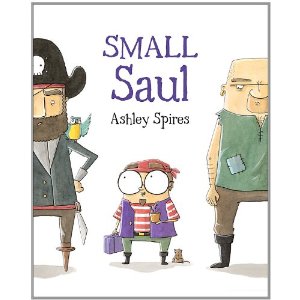
cover art for anti bullying picture book Small Saul


3. Big Bouffant


4.