
Friday, 26 July 2019
A Balancing Act
We have all heard of the analogy of Life and Juggling Balls. My recent mentor used the analogy to explain the role of a Principal. As an administrator you are constantly juggling far too many balls in the air. It is easy to think how can I possibly keep these all in the air - the numerous requests, support and demands from students, staff, parents, Supervisors, and email are just a few of the jobs to balance. The list could go on for miles. Now look at the demands and tasks and separate them into glass balls and rubber balls. If you drop glass balls there is sure to be a devastating outcome as the ball shatters into millions of pieces. Taking more time to clean up then to have completed in the first place. When you drop the rubber ball it will eventually bounce back. The next time you are feeling overwhelmed by the number of tasks and demands that face you in your career determine which ones are glass and which ones are rubber! What can you let go of by passing on to someone else.

Shout Out!
Richard Byrne
I wanted to take a minute to do a shout out for Richard Byrne's Practical Ed Tech Tips. I can spend hours watching his you tube videos for tips and tricks.
Just recently I wanted to import my blog into a google site and found a quick tutorial on Byrne's channel.
https://www.freetech4teachers.com/
Monday, 15 July 2019
New FSL Teachers
The FSL teacher
When you have core French teachers in your school do they feel included in Staff PD? Do they play a role in Collaborative Inquires? As a leader do you struggle to provide instructional leadership for new FSL teachers?
Across Ontario school boards are facing the crises of FSL teacher shortages and Principals are dealing with a revolving door of new teachers.
Moving forward I am working on a professional learning plan for new French teachers in my building.
Of course for all new teachers there are procedures to share to welcome them to the building:
- Staff handbook (I am working on a digital version on google drive)
- Staff Calendar and Email
- Tour of the building, timetable, supervision schedule and keys to the school
- School Improvement Plan
For FSL teachers I would also include the following resources
- New FSL Teacher Handbook
- Including Students with Special Needs in FSL Programs
- Welcoming ELL's into FSL Programs
- Listening to Learn: A Differentiated Approach to Teach Listening in Core, Extended & French Immersion
Since we run collaborative inquires during staff meetings it is important to think about how the FSL teacher fits into the groups.
Food for thought:
How does the staff view FSL teachers in the school?
How do FSL teachers collaborate with other FSL teachers?
What resources are available in the school to support FSL teachers?
What resources are available in the board to support FSL teachers?
Teacher Resources:
Ontario New FSL Teacher Handbook:
https://sites.google.com/teltgafe.com/fsl-handbook/home?authuser
Resources for new teachers can be found at this site:
https://transformingfsl.ca/en/resources/
Instructional Leaders:
https://sites.google.com/teltgafe.com/cefr-ontario/home A website that shares professional learning materials from CEFR provincial initiatives with Ontario's English-language school boards, to support effective planning, instruction and assessment in French as a Second Language (FSL) programs.
Friday, 12 July 2019
What are the components of an effective Collaborative Inquiry?
What are the components of an effective Collaborative Inquiry?
An effective collaborative inquiry should stem from an urgent student learning need. When brainstorming student learning needs best practice is to come to the table with evidence based on data, observations and conferencing with students.In the "Facilitators Guide" Donohoo outlines how to "Frame the Problem" with your team. Her approach is easy to follow, allows for everyone to have a voice and provides examples.
Once you have the problem you are looking to solve you want to develop an inquiry question. The "Question" is what guides the inquiry (the actions, data and evidence). When developing the question it has to be explorative and promote discovery, begin with the words how or what, and specify the focus of your team's inquiry.
Donohoo suggests using a sentence stem when creating a question for a collaborative inquiry:
What is the impact of .... (classroom practice/ teacher action) On .... (Student Learning)
Here are some examples taken from the "Facilitators Guide"
1. What is the impact of using exit cards with my students?
2. How can we work with teachers to help students achieve success in their written work through student led conferences?
3. How can 'Self Assessment Matrixes' be used to improve the self regulation skills of adolescents?
Next the team must determine a story line that will connect their preferred future with specific strategies that will be used to improve teaching and learning. These are framed as If...Then statements.
Example:
If teachers use exit cards at the end of a science lesson then teachers will be able to determine student learning and next steps.
It is important to determine what evidence will be collected in order to answer the inquiry question.
Donohoo sorts the type of data into four types: Student Learning Data, Demographic Data, Perceptual Data, and School Process Data.
In my experience working in collaboraive inquiries it is not as important to dwell on the type of data as it is to determine what evidence will be collected, how it will be collected and by when.
Getting this information in writing and agreed upon by the team helps to keep everyone on track as it is easy to walk away from a group meeting, return to the classroom and continue as normal.
Setting dates to come back together as a team and report on how things are going is critical as well as providing time for this to happen. We have used staff meetings to work on collaborative inquires.
The research for Collaborative Inquiry comes from the following resources:


Monday, 3 September 2018
Why morning meetings?
I have been looking into the concept of morning meetings. Being tribes trained a lifetime ago makes me familiar with the idea of community circles but the morning meeting that comes from Responsive Classroom has 4 distinct components:
1. Greeting
2. Sharing
3. Group Activity
4. Morning Message
The morning meeting was created with the intention of spending 20-30 minutes in a circle each morning.
So, the question I have been pondering is can I dedicate 20-30 min of the day to morning meeting? Will the outcome be worth it? Will students benefit from the time we spend in morning meeting?
One of the pros of morning meeting is the goal of merging academic, social and emotional learning and the reinforcement of sense of belonging. Especially in a time where we see an increase in student difficulty with self regulation, emotional well being and increase use of technology.
My gut says try it and analyze the results to see if students are meeting the intended goals.
1. Greeting
2. Sharing
3. Group Activity
4. Morning Message
The morning meeting was created with the intention of spending 20-30 minutes in a circle each morning.
So, the question I have been pondering is can I dedicate 20-30 min of the day to morning meeting? Will the outcome be worth it? Will students benefit from the time we spend in morning meeting?
One of the pros of morning meeting is the goal of merging academic, social and emotional learning and the reinforcement of sense of belonging. Especially in a time where we see an increase in student difficulty with self regulation, emotional well being and increase use of technology.
My gut says try it and analyze the results to see if students are meeting the intended goals.
Tuesday, 28 August 2018
Tar Heel Reader - Easy to Read books
I was introduced to this website at a conference: Tar Heel Reader. The best news is that access to the website is completely free! Who doesn't love free resources. I would suggest pre-reading the selection of books you would like your students to access.
https://tarheelreader.org/
You have to email for a registration code if you would like to be able to write a book.
You can access books written in a variety of languages. I chose French books and found that I would have to be fluent in French to ensure the pronouns were correct before allowing students to read the text. However I was thinking I could publish my own books. I could see using this for social stories!
Excerpt taken from website: "Tar Heel Reader, a collection of free, easy-to-read, and accessible books on a wide range of topics. Each book can be speech enabled and accessed using multiple interfaces, including touch screens, the IntelliKeys with custom overlays, and 1 to 3 switches. Click here to learn more about alternative access methods."
"You may write your own books using pictures from the huge collection at Flickr or pictures you upload. All books should be complete, edited, and revised to the best of your ability before publishing them to the site. While you are working on them, please save them as drafts."
Here is a sample page from the book "Busses"

Thursday, 16 August 2018
Digital Meanderings: #EpicPals
Digital Meanderings: #EpicPals: EpicPals is a collaborative reading project that utilizes Epic! Books for Kids, Padlet, and Flipgrid. I can't wait to try this in the classroom. Great resource for teachers and Epic is free for educators - Bonus!
Sunday, 5 August 2018
Caring and Safe Schools in Ontario
What do you want to know more about to create a caring and safe school?
If, like me you are seeking to understand student behaviour in the learning environment it will be helpful to keep in mind the following facts:
✦ Behaviour occurs in a context.
✦ Behaviour is learned.
✦ Behaviour serves a function for the individual.
✦ Behaviour can be changed over time.
(Surrey Place Centre, 2008, p. 7)
✦ Behaviour occurs in a context.
✦ Behaviour is learned.
✦ Behaviour serves a function for the individual.
✦ Behaviour can be changed over time.
(Surrey Place Centre, 2008, p. 7)
The challenge is being able to identify the cause of the behaviour. It is easy to identify what the student is doing (yelling out in class instead of raising his/her hand) but if we focus only on what the student is doing and try to stop that behaviour it is possible the another behaviour will arise. The key is determining the function the behaviour serves for the student. Thinking in context of Ross Greene, kids do well if they can, it is our job to figure out what the student is trying to communicate through the behaviour. Think in terms of gardening we know that in order to eradicate the weed we must pull out the root otherwise the weed will grow back.
The challenge within a school of numerous educators is defining behaviour. The defining characteristics of challenging behaviour will differ from individual to individual depending on an educators cultural background, childhood experience, relationship with the student, and classroom and school policies.
Aside from personal schema one must also consider mitigating factors. Below is a diagram from "Safe and Caring School" that suggests different needs and types of conditions affecting student behaviour.

Some behaviour effectively meets the needs of the student, reflects the student’s interaction with the environment, and is understood and considered appropriate by others. Other behaviour may be ineffective but may occur because it is a student’s best available strategy for interacting with the environment and having his or her needs met.
So know that we know there can be a variety of factors affecting student behaviour how can we become more understanding and gain knowledge to be able to support students.
Student and Parental Voice:
Allow our students to do the the talking and the sharing. Learning from the student can be very effective. We have used student surveys to ask students what they need to be successful and what they feel when they are stressed out.
School Team Meetings:
Observation and data can help to determine the underlying cause of the behaviour. Discussion and having more heads look at the situation can be helpful when reflecting on possible scenarios.
Guest Speakers/Experts:
Bring in an expert in different fields to talk to staff about student needs and conditions that affect student behaviour. Your special education consultant, Mental Health Lead, and Government agencies (CMHA) may be willing to come in and speak about a topic.
Websites:
There is a plethora of information on the Internet that can be used to share information with staff.
Student Profiles:
Creating student profiles and sharing those profiles amongst staff can help others to reflect on student behaviour and the cause of the behaviour.
Wednesday, 1 August 2018
Progressive Discipline
Progressive Discipline
Policy/Program Memorandum No. 145 describes progressive discipline as the use of “a continuum of prevention programs, interventions, supports and consequences to address inappropriate student behaviour and to build upon strategies that foster positive behaviours.When inappropriate behaviour occurs, disciplinary measures should be applied within a framework that shifts the focus from one that is solely punitive to one that is both corrective and supportive. Schools should utilize a range of interventions, supports, and consequences that are developmentally appropriate and include learning opportunities for reinforcing positive behaviour while helping students to make good choices” (Ontario Ministry of Education, 2009g, p. 3).
http://www.edu.gov.on.ca/eng/general/elemsec/speced/Caring_Safe_School.pdf
School leaders and staff have two responsibilities:
- Assess student behaviour and the effectiveness of existing supports and interventions and
- Develop a response that takes account of mitigating circumstances and other factors that may have influenced the behaviour.
What are Mitigating Circumstances?
Factors, identified in Ontario Regulation 472/07, “Suspension and Expulsion of Pupils”, that must be taken into account by a principal when considering whether to suspend or expel a student. The absence of risk to others in the school and/or the student’s inability to control his or her behaviour or understand the consequences of the behaviour are examples of mitigating factors.
Factors, identified in Ontario Regulation 472/07, “Suspension and Expulsion of Pupils”, that must be taken into account by a principal when considering whether to suspend or expel a student. The absence of risk to others in the school and/or the student’s inability to control his or her behaviour or understand the consequences of the behaviour are examples of mitigating factors.
The goal of any school is to have a disciplinary system that maintains a safe and violence-free school, but still protects the human rights of all of our students. The introduction of the Mitigating Factors Regulation protects the rights of our students in need. A principal must consider the following factors when looking at the misbehaviour.
Making decisions regarding student discipline is not easy or taken lightly by any administrator. My number one question that I ask myself before making a decision regarding discipline is "What is going to change their behaviour?" Suspension is not my go to for discipline simply because most of the time suspending a student is not going to change the behaviour. Of course there is board policy that must be followed and sometimes you don't have a choice whether to suspend. - Does the student have the ability to control the behaviour?
- Does the student have the ability to understand the foreseeable consequences of the behaviour?
- Does the continuing presence of the child in the school create an unacceptable level of risk to the safety of any other person?
Reducing the number of suspension does not always make you the favourite with staff. My response to that is lack of understanding. If you want someone to be on your side they need to know and understand your decision making. The following activities below will promote discussion, reflection and questions regarding progressive discipline.
This poster (available at the link below) is a visual representation of students' view of bias-free discipline and would be a great graphic to start a conversation with staff about progressive discipline, mitigating factors and caring and safe schools.

The case study below taken from the ministry guide "Supporting Bias Free Progressive Discipline at School" can be used at a staff meeting to promote reflection, discussion and review of current policies and practices in regards to discipline.
Daniel, a Grade 8 student, has been having difficulty paying attention in class. He has stopped doing his homework on a consistent basis, and his grades have dropped considerably. His homeroom teacher brought Daniel to a meeting of the in-school resource team, and Daniel is now on a waiting list for a formal assessment. Recently, Daniel started to yell out in class. The principal has met with Daniel on several occasions, but the homeroom teacher reports that his classroom behaviour has not improved. The principal is concerned that Daniel’s outbursts may have something to do with an underlying learning disorder. On Friday, Daniel swore at the homeroom teacher and threw his books in his direction. The principal suspended Daniel for two days. Daniel’s parents are not pleased and believe that the principal does not know how to manage teachers who simply do not understand their son. They plan to appeal the suspension and no longer want Daniel to be formally assessed.
Questions for consideration:
1. What are the issues in this scenario?
2. What information and what mitigating and other factors, should the principal have considered when Daniel swore at the homeroom teacher?
3. What information might the principal have considered previously that would have warranted providing early interventions?
4. What preventive measures could have helped Daniel?
5. What supports and interventions would you consider for Daniel and his family?
6. How would you respond to the parents?
7. What action is needed to improve existing practices in order to prevent similar incidents in the future?
Here are suggestions for school and system leaders to promote progressive discipline. Handout: http://www.edu.gov.on.ca/eng/policyfunding/SupportPlacemat.pdf
Review:
Review policies and practices related to progressive discipline to identify and remove,
or prevent, bias and discriminatory barriers
Review various types of data for evidence of the effect (positive or adverse) that
progressive disciplinary practices are having on students, including students
identified in the Code, and determine ways to achieve more positive effects
Develop/Refine:
Collaborate with staff, students, parents, and community members to address perceived biases and stereotypes
Expand knowledge among members of the school community and guide them in the development and
implementation of a bias-free approach to progressive discipline
Promote positive peer interaction, healthy relationships, and a positive school climate
Act:
Engage members of the school community in actively supporting positive
student behaviour
Establish with staff the practice of taking into account mitigating and other factors
when responding to inappropriate student behaviour
Apply policies and practices consistently and equitably, taking into account that equity
does not mean treating people the same without regard for individual differences
Below is a four page handout that can be shared with staff. Be aware that some of the links no longer work.
Progressive Discipline: Part of Ontario’s
approach to making
schools safe places to learn.
http://www.edu.gov.on.ca/eng/safeschools/discipline.pdfMonday, 30 July 2018
Kids can Learn
Key learning from Shared Solutions and Learning for All.
- Conflict can be avoided with effective communication and a positive community.
- Collective Teacher Efficacy is the number one influence related to student achievement.
- Positive Relationships improves student learning.
What do they all have in common?
The deeply held belief that all students can learn despite their circumstances!
Just to confirm there is a lot of staff that might say superficially that they believe that all students can learn but to truly be of that opinion you have to understand that if the student is not learning it is because the adult has put up barriers.
What? Did I hear that correctly? The teacher has put up barriers causing the student not to learn. Let's dissect what it means for the education system to put up barriers.
If all kids can learn then why do we end up sitting in meetings to discuss the students who are struggling to learn? If we are a strong believer of the statement, then the meeting will be focused on what the teacher needs to do to adjust the learning environment instead of what the child is doing to stop themselves from learning.
When the conversation shifts to the student's choices and inability to want to learn then the problem lies in the belief of the staff and not in the children.
Think about a recent team meeting you have sat in. What statements do you hear during those meetings? Do they sound like the following?
He doesn't do his homework.
The parents are not helping her at home.
She doesn't practice reading at night like I suggested.
The parents have asked for homework and it never comes back completed.
He is never paying attention in class.
I'm constantly telling her to stop talking and to listen.
She never puts in effort to complete her work.
The message in these statements are the same - the student is not learning because they are choosing not to participate in their learning. If that is the argument being made then can we justify the belief that all students can learn?
The statements above absolve the teacher of their responsibility for student learning. The message is that the student is choosing not to learn and it's not my fault they are failing.
In contrast, a teacher who truly believes that all children can learn will use the meeting to ask what am I doing to stop the learning and what can I do next. I have done everything I can and I'm here to get more ideas. The focus shifts from the student choosing not to learn to the adult wanting to break down barriers in the learning environment so that the child can learn.
How can administrators build a positive community whereby the core value "All children can learn" is put into practice?
Provide an engaging and safe space to take risks. A positive community of co-learners is built over time by fostering relationships where educators "feel safe to be vulnerable" and take risks as they learn.
Have high expectations for all learners that includes yourself. Staff need to know you believe in their potential.
Staff need to see themselves as co-learners and be willing to:
- exchange learning and insights within and between roles
- engage in focused conversations about learning
- ask thoughtful questions and reflect on current practice
- come to common understandings about instructional and collaborative practices
References:
Sunday, 29 July 2018
Learning profiles and how they help with challenging behaviour
Teachers that have the most success with behavioural students are able to establish a relationship with the student. So how to you develop a relationship with a student in your class that is particularly challenging?
- Find ways to interact with the student one-on-one. I learned really quick to never discipline or call a student out for their behaviour in front of their peers. The same applies to building a relationship with a student. It can be difficult in a group setting to make a connection with a student. Invite the student to play a game of cards, have lunch together, join a club you are running etc.
- Find ways to connect to the student through one of their interests.
- Be a good listener. Do not judge or point out the negative.
- Show the student that you believe in them and that you like them despite the behaviours they demonstrate
- Be consistent
- Show interest in their personal life, empathize, listen and offer support
- Bottom line in order to develop a relationship the student must be able to trust you and they need to know that you have their best interest at heart.
Developing learning profiles for students in your class will be especially helpful in getting to know your students and what they need to succeed. Also, if the student does not know how to advocate for their needs or what they need to succeed then you can support the student in their learning journey.
" The more we understand our students, the more efficient we can ensure their learning successes." McCarthy. When we have in-depth understanding for how our students learn, there is a major impact on diagnosing student needs and planning effective supports. When a student can see that you are advocating for their needs, helping them to succeed and giving them an equitable opportunity to succeed, your relationship with that student will grow. When students are constantly in a learning environment that is above their zone of development the student is going to be frustrated and could present challenging behaviour. Thus in learning about your students' needs and differentiating the learning experiences in your classroom you are in fact killing two birds with one stone: building relationships and diminishing unwanted behaviour.
I came across an excellent site with activities to use with students to create learning profiles. http://www.livebinders.com/play/play?id=475167#anchor
The website was referenced in the article "Welcome to Learner Profiles" at https://edpd593finalproject.weebly.com/
John McCarthy posted strategies for collecting learning profiles on his blog: http://openingpaths.org/blog/differentiation-learning-preferences/
Poverty and Education
In education it is important that we help our staff understand culturally relevant pedagogy.
Ask yourself are marginalized students over-represented in your school's special education program? I have noticed a disparity in our community for families living below the poverty line as well as equity of access to support children with special needs. It is difficult for families to access counselling, psycho-educational reports, occupational therapy and speech therapy without the means to seek private organizations.
At the school board level we have a poverty committee to address helping staff to understand the challenges that marginalized groups face daily. We are hosting a poverty challenge beginning with senior staff and then hopefully reaching all staff that work with children directly or indirectly. The poverty challenge is a chance for staff to walk in the shoes of someone living below the poverty line.
“We can’t sit here and think we know (about poverty) when we don’t,” said Martine Creasor, a caseworker with Lambton County’s social planning and program support department. “We have to educate ourselves about what it is they’re dealing with, and then we become part of the solution.”
The idea is that if there is more understanding about the causes and circumstances around poverty and the hoops people need to jump through just to get to the services meant to help them, there will be more empathy and support to develop strategies to help our students living in poverty.
In Guelph, Circles Guelph Wellington consists of three innovative programs:
- Bridges out of Poverty educates people from the middle or upper classes about what it means to live in poverty;- Getting Ahead is a program that helps people of low income learn about their own strengths and the resources available to them and;- Circles brings people from both programs together, creating relationships across economic boundaries and helping people move from poverty to sustainability.
Bridges offers training and is available to talk to school staff about the social and economic impact that poverty has on individuals and the community. Participants of the training are invited to look at poverty differently. This framework recognizes that individual choices can lead to poverty. Equally important, it recognizes there are other contributing circumstances that individuals have no control over. The Bridges model is built on the proven concepts that everyone in a community has a role to play in poverty reduction.
This would be an excellent resources to bring into the school for a staff meeting.
Monday, 23 July 2018
Anxiety in School
At the school mental health assist website you can find a tutorial series created to support educators in building understanding and knowledge of mental health and wellness in school.

Tutorial #2 focuses on Recognizing and Responding to Anxiety in the Classroom
There is a video, information sheet and PDF slideshow of the information presented.
This is a great resource to use with school staff if you are a school administrator or creating professional development for staff.
https://smh-assist.ca/online-learning

There is a video, information sheet and PDF slideshow of the information presented.
This is a great resource to use with school staff if you are a school administrator or creating professional development for staff.
There are four sections in the tutorial:
- What is Anxiety
- Signs and Symptoms
- Classroom Strategies
- Specific Strategies
Staff could be divided into four groups, assigned a section and prepare a brief presentation of the key findings to staff. Follow-up with a group discussion on what is being done in your school to support student mental health specifically anxiety in each tier. Have each group draw a triangle and record what they feel has the biggest impact in each tier. As the school leader I would collect information, reflect and determine next steps.
Inclusive Change
What does the word Change mean to you?
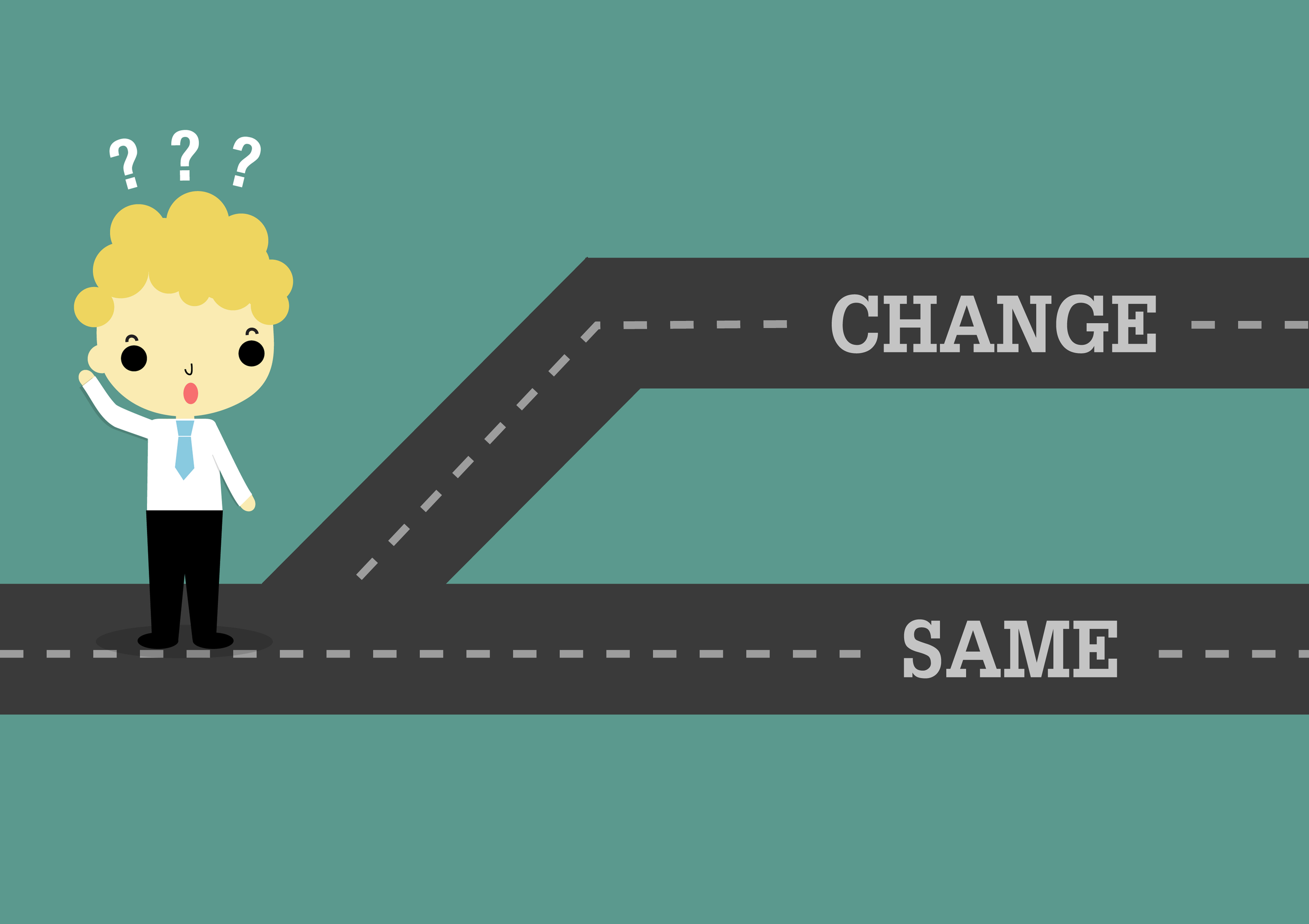
Andy Hargreaves wrote an article on one of the most important areas of leadership theory and practice, educational change and its impact upon teachers.
It is important to remember - Change and Emotion are inseparable! There is no human change without emotions and there is no emotion that does not embody a momentary process of change.
Change is inevitable in the career of a teacher and can be natural (ending of a school year) or imposed (new leadership).
Andy summarizes educational change as an external change that is unwanted, imposed, repetitious and sometimes repellant, compared with more professionally positive, self directed change (p.294).
Teachers' emotional response to external mandated change vs. self initiated change:
External Mandated Change:
More often than not self initiated change comes form mandated change so how do leaders elicit a positive emotional response to a mandated change?
Andy concludes that it is less important whether the source of change is external or internal then the way it is implemented. Teachers want to see how it will benefit students, they want change to be flexible and to have proper support.
As a leader if you are trying to implement change in an elementary school:
"Change is easy to propose, hard to implement, and especially hard to sustain."
Andy Hargreaves
Andy Hargreaves wrote an article on one of the most important areas of leadership theory and practice, educational change and its impact upon teachers.
It is important to remember - Change and Emotion are inseparable! There is no human change without emotions and there is no emotion that does not embody a momentary process of change.
Change is inevitable in the career of a teacher and can be natural (ending of a school year) or imposed (new leadership).
Andy summarizes educational change as an external change that is unwanted, imposed, repetitious and sometimes repellant, compared with more professionally positive, self directed change (p.294).
Teachers' emotional response to external mandated change vs. self initiated change:
External Mandated Change:
- Emotional response is negative
- Associated with government reform or legislation
- Forced upon teachers
- Implemented poorly
- Tight time scale
- Insufficient resources
- Teachers that respond positively to mandated change are more likely to be female, younger, do not teach mainstream subjects and in innovative schools.
Self Initiated Change:
- Emotional response is positive
- Fulfills teacher's purpose
- High school teachers more likely to become involved in change that benefits their students outside of the classroom
- Elementary teachers more likely to become involved when it involves other colleagues and changes on improving teaching and learning within the classroom.
More often than not self initiated change comes form mandated change so how do leaders elicit a positive emotional response to a mandated change?
Andy concludes that it is less important whether the source of change is external or internal then the way it is implemented. Teachers want to see how it will benefit students, they want change to be flexible and to have proper support.
As a leader if you are trying to implement change in an elementary school:
- Ensure that you are allowing staff to work together.
- The focus relates to improving teaching and learning for students within the classroom
- Invest time and money into the initiative (release time, resources).
- Allow for professional flexibility so that teachers professional judgement, passion and purpose can be included in the change process.
- Ensure that you have the commitment of your teachers before moving forward with any agenda.
One problem that I can see arise when trying to implement change is the rotation of leadership. What is the desirable length of time for a leader to be at a school so that staff do not feel that the leadership and change initiatives are a revolving door and they can essentially wait it out until the next leader comes in.
http://andyhargreaves.weebly.com/video.html
"Improvement is about doing something better; innovation is about doing something new." Andy Hargreaves
Tuesday, 17 July 2018
Bringing Aboriginal Perspectives into the Classroom
Just reminded of this resource today...
Aboriginal Education Strategy
Practical teaching strategies for the elementary classroom
Download these professionally developed teaching strategies, designed to help Ontario teachers bring Aboriginal perspectives into the classroom.
Aboriginal Perspectives: The Guide to the Teacher's Toolkit (Online Version)
First Nations and Treaties Map of Ontario Information for Educators
Communication and Building Relationships
I was given the task to research one article on communication and/or building relationships within schools and communities. So I naturally went to twitter and searched communication and building relationships and came across a post referencing Frank Sonnenberg's article "Building Bridges: We're in This Together." He lists 46 ways to enhance communication, improve relationships and foster teamwork between people.
I took the 46 suggestions and divided them according to the Personal Leadership Resources in the OLF. That was a much harder task then I imagined as I struggled to place to fit the suggestion into one category. There is a lot of overlap and great conversation to be had when determining if the skill is social, psychological or cognitive resource.
Here is what I ended up with:

I blew up each section to be able to read it!


Monday, 16 July 2018
TRUST is Essential to Building Relationships

Put yourself in the shoes of an at risk, vulnerable youth and any of the statements below could be true:
- There is sometimes food to eat and other times the fridge is bare
- You don't have running shoes that fit you for gym class
- Your gaurdian could not afford to purchase the medication you rely on to reduce your anxiety
- Your older brother was up all night partying with his friends and because of that you didn't get much sleep
- You waited up until your dad got home from his night shift because you wanted to see him
- Your parents were fighting before you left for school
- You have watched your parent or sibling doing drugs
What is one area that these students have in common MISTRUST. Rightly so, as an infant and child you need to trust that someone is going to feed you, love you, and provide your basic needs. When an infant/child has experienced trauma, loss or endured periods of time when their basic needs were not being met it can lead to mistrust of adults and peers. Mistrust is a valid response to feeling betrayed, abandoned or experiencing traumatic life events.

What improves student learning - positive relationships. What is at the essence of relationships - Trust!

Trust is the choice to be vulnerable and the ability to take risks in another person.
Creating a culture of trust in your school is essential for effective leadership and learning for ALL.
When a parent asks "Tell me about my child's learning?" or "What next?" They need to able to trust you as the teacher or administrator and know that you have the their child's best interest at the forefront of the decisions being made.
In Davis' Ted Talk he speaks of three drivers of trust:
1. Ability - does the person do what they say they are going to do. Does the person have the ability to do what they say they are going to do?
2. Benevolence - Do they care about me? If they really care about me it is more likely to trust in the person.
3. Integrity - having a set of values and living those values that other people agree with. Saying you are going to do something and doing it!
When you are trying to build trust with students, parents of special needs students or staff in your school it is important that leaders build the perception of their ability benevolence and integrity.
What improves student learning - positive relationships. What is at the essence of relationships - Trust!
Creating a culture of trust in your school is essential for effective leadership and learning for ALL.
When a parent asks "Tell me about my child's learning?" or "What next?" They need to able to trust you as the teacher or administrator and know that you have the their child's best interest at the forefront of the decisions being made.
In Davis' Ted Talk he speaks of three drivers of trust:
1. Ability - does the person do what they say they are going to do. Does the person have the ability to do what they say they are going to do?
2. Benevolence - Do they care about me? If they really care about me it is more likely to trust in the person.
3. Integrity - having a set of values and living those values that other people agree with. Saying you are going to do something and doing it!
When you are trying to build trust with students, parents of special needs students or staff in your school it is important that leaders build the perception of their ability benevolence and integrity.
How are some ways you can do that?
- By making promises you know you can keep!
- If you give your word that it will happen you better ensure it does!
- Do your best to live up to your commitments and be on time for your meetings!
- Show you care by asking questions, listening and celebrating!
- Continue your professional learning especially in Special Education so you know what you are talking about!
Subscribe to:
Posts (Atom)